The Assassination Attempt
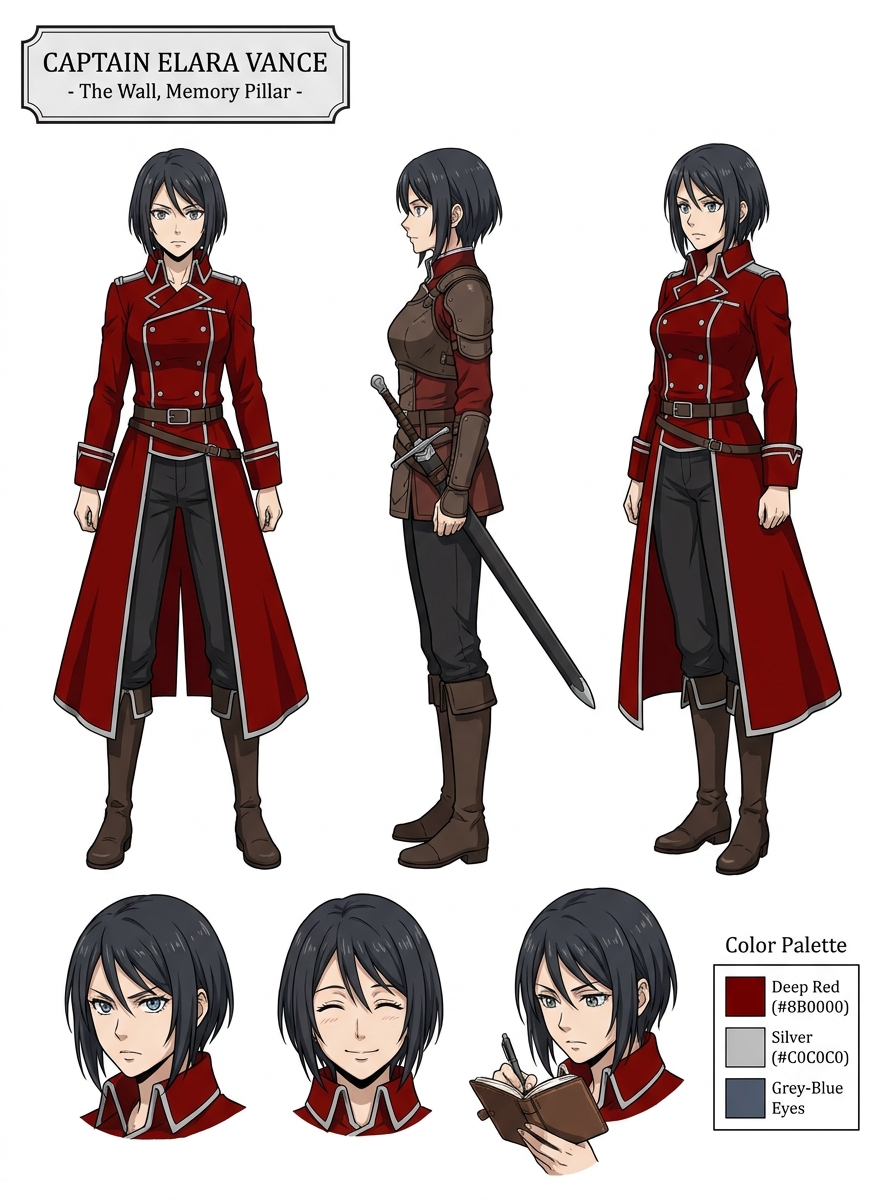
In which our protagonist learns that legacy code includes hitmen, and Elara has a very good evening.
The window came in at the second hour of the second watch, and the three men who came through it moved with the fluid coordination of people who had done this many times.
The first man had a knife. The second man had a knife. The third man had a bag of powder that glowed the color of moss, and the bag was warm in a way that was not natural, and the warmth was the kind of warmth that the Compiler logged as corruption, cult-marked, do not touch. The first man lunged at Kenji. The second man went low, for the legs. The third man was already pulling the bag open, and the powder was already spilling out into the room, and the powder was already doing the thing the powder had been designed to do, which was the thing the system in Kenji's head had been warning him about since the first horn in the forest.
Elara was already moving.
She had not been cleaning her sword. She had been waiting. She had been waiting, Kenji realized later, because she had seen the shadows in the window and had decided, with the calm professionalism of a person who has defended walls for seven years, to be ready. The first assassin came at Kenji. Elara met him in the middle, took his knife hand off at the wrist, and stepped over the body without breaking stride. The second assassin came in low. Elara sidestepped, opened his guard, and put her sword through his chest.
[Threat assessment: dimensional intrusion, cult-marked]
[Targets: developer (primary), apprentice (secondary)]
[Compiler note: the captain is, in a small way, magnificent.]
The third assassin threw the bag. The bag broke on the floor. The room filled with a sickly light, and the light was, in the language of the system, the light of a piece of the corrupted source code being deployed at close range. The light ate mana. The light ate spells. The light ate the kind of magic that Kenji had used to keep himself alive for three months, and the light was, in the driest possible language, the kind of weapon that the cult had been building for years.
Pip screamed. The dragonfly's pulse was sharp, urgent, and the pulse was not a warning about the assassins. The pulse was a warning about the powder. The pulse said, in the language the system used for things that mattered: This is cult magic. This is the bug. This is the part of the code that should not be here.
Kenji cast the firewall. Not a big one. A small one, just around Elara, just enough to block the green light from touching her. The firewall shimmered into existence. The green light stopped at the edge of the wall, hissed, and went around it, and Elara was suddenly standing in a clean pocket of mana, with a sword in her hand and a look on her face that Kenji had never seen before.
She took the third assassin's head off in a single, clean stroke.
The room was quiet. The green light faded. The two dead assassins lay on the floor. The third was still alive, blinded by the flare, and Pip was orbiting his head, pulsing, the pulse feeling like: "Do not let him go. Do not let him go. Do not let him go."
Kenji did not let him go. He pinned the man to the floor with a small redirect spell, which turned out to work just as well on people as it did on water, and he said: "Who sent you?"
The assassin said nothing. He tried to bite his tongue. Kenji stopped him with another redirect, which turned out to be very good at redirecting small motions, and the man stopped trying to bite things.
"I will ask you again," Kenji said. "Who sent you?"
"Baron Vex," the man said, finally. "He paid us. He said you were a problem. He said the cult would want you dead anyway, so we might as well get paid for it."
"The cult. Are you cult-connected?"
"We do not wear the robes. We just take their money. They have money. We do work."
"Where is the cult now?"
"I do not know. We do not ask. We just work."
Kenji looked at Elara. She was breathing hard, but her eyes were calm. She said: "The cult has been funding the nobles. The nobles have been funding the assassins. The whole thing is one network."
"The whole thing is one system," Kenji said. "And the system has a name. The name is Malachar."
[Trace: powder sample, partial recovery]
[Source: cult-manufactured, signature matches the horn from Oakhaven]
[Compiler note: this is a piece of the corrupted source code. The system is, in a small way, frightened.]
[Compiler note: the network is one system. The developer is, in a small way, learning.]
The assassin looked confused. Kenji did not explain. He handed the man to the king's men, who had arrived in response to the noise, and he sat down on the floor, and Pip landed on his shoulder, and the dragonfly pulsed, softly, and the pulse felt like: "That was close."
Kenji sent back: "Yeah. Too close."
Elara sat down beside him. She was still holding her sword. There was blood on her face. It was not her blood. She was, Kenji thought, in a small way, a colleague. She was, in the driest possible language, a senior engineer who had been asked to debug a sword fight, and the senior engineer had, in the last twelve seconds, debugged two swords and a bag of cult magic, and the debug had been clean.
"I am going to start sleeping in your room," she said.
"I was hoping you would say that."
"Good. We will discuss the terms in the morning. Right now, I need a drink."
"I do not drink."
"Then I will drink for both of us."
She did. They sat in the room with the two dead assassins, and the night went on, and the kingdom was still in chaos, and the cult was still out there, and the network was bigger than anyone had thought.
But for the moment, they were alive. And that was enough.
The next morning, Kenji sat in the small audience chamber with the king and the apprentice and a half-empty bottle of something the king had produced from a cabinet that was, in Kenji's professional opinion, the most expensive thing in the palace. The king had not slept. The apprentice had not slept. The bottle was open. The mood was, in the dry language of the system, post-incident, do not deploy without review.
"I am sorry," the king said, finally.
"You did not send them."
"No. But they came for you, in my palace, in my capital, and my guard was bought, and my mage was bought, and my council was bought, and you are here because I asked you to be here, and the people who wanted you dead are here because I was too slow to find them."
"You were not too slow. You were the only one who tried."
The king looked at him. The king had the look of a person who has been king for a long time and is only now realizing what being king costs the people around the king.
"I am making changes," the king said. "The bodyguard detail. The wards. The standing orders. You will not be unprotected again."
"I have Elara."
"You have Elara. You also have me, and a kingdom, and a list of forty-seven names, and a cult that has just learned that the new Strange Sage is not a man who can be killed by three men in a window."
"They will try again."
"Yes. They will try a more expensive way. With a more expensive person. And the more expensive person is the one we have to be ready for."
He looked at the bottle. He poured Kenji a glass. They drank, in silence, the way two engineers drink when they have just shipped a fix that almost broke production, and the fix is holding, and the holding is, for the moment, all they have.
Pip orbited the bottle, slowly, and pulsed once, very softly, in a tone that was, in a small way, ahead of all of them. The pulse felt like: "The bug is bigger than the bug reports. The bug is, in a small way, the whole story."
Kenji sent back, in the language he and Pip had built together: "I know. We debug it anyway."
The night went on. The kingdom was, in a small way, awake. The debugging was, in a small way, beginning.
And somewhere, in the south, in a place that was not a place, the presence that was Malachar was thinking. The structured mage had survived. The structured mage had used the captain. The structured mage had, in the driest possible language, started to debug the network, and the network was, in the driest possible language, the body of the bug.