The Refugee Crisis
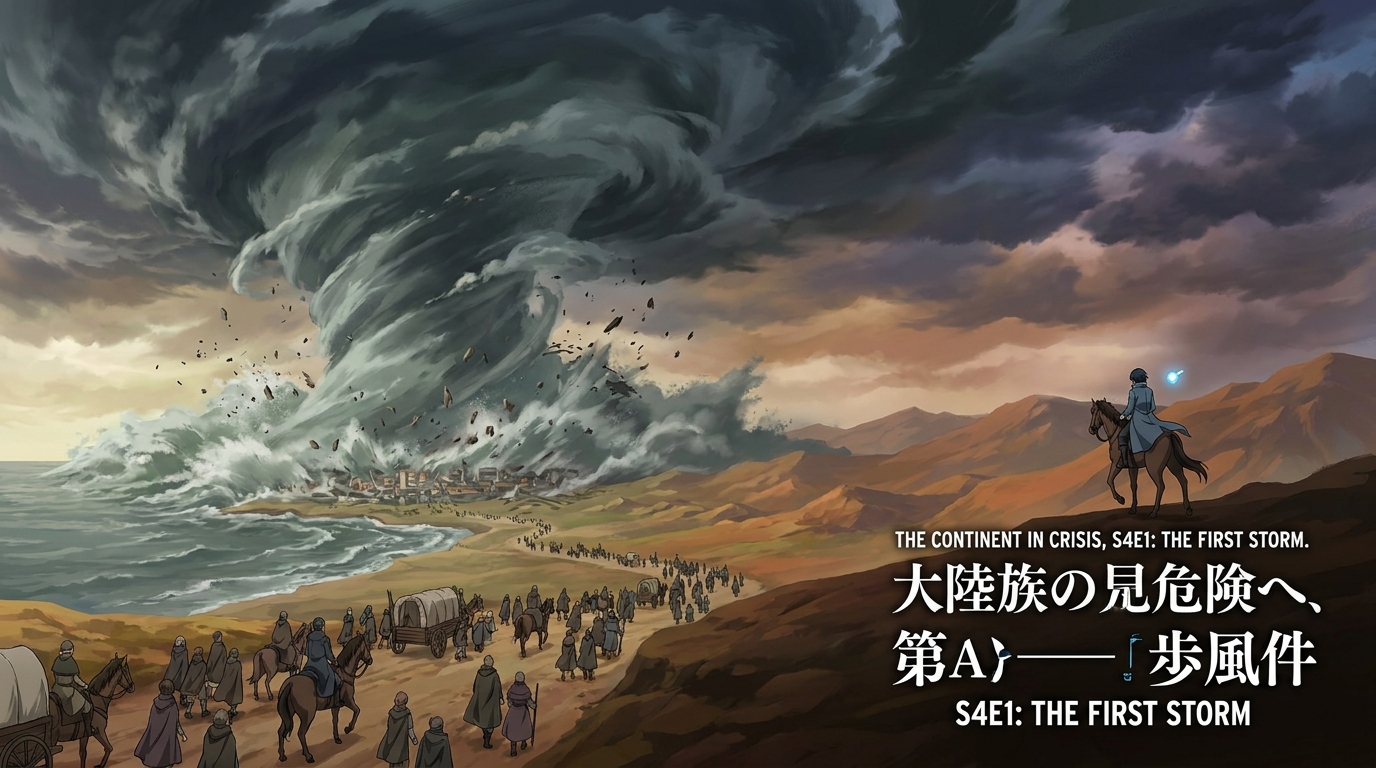
In which our protagonist discovers that scaling a system is harder than building one, and Elara gets worse.
The refugees kept coming.
By the end of the first week, the capital had absorbed forty thousand people. By the end of the second week, it had absorbed eighty thousand. By the end of the third week, the count had passed a hundred thousand, and the city was beginning to break.
The shelters were full. The hospitals were overflowing. The food stores were gone. The morale was not low anymore. The morale was gone. People were fighting over bread. Children were getting sick. The guards were exhausted. The mages were burned out. The king was holding the kingdom together by sheer force of will, and even he was starting to crack.
Kenji was running on three hours of sleep a night. He was making decisions that affected tens of thousands of people. He was watching his system fail in slow motion, and he was doing the only thing he could do: he was patching it.
Patches. That was what the work had become. A patch here. A patch there. A small spell to extend the shelters. A small spell to purify the water. A small spell to slow the spread of disease. A thousand small spells, each one a band-aid on a system that was bleeding out.
It was, he realized, exactly the way legacy code always failed. Not in one catastrophic crash, but in a slow, grinding, piece-by-piece collapse, where every fix was a temporary fix, and every fix made the next fix harder, and the only solution was a full rewrite, but the rewrite was too expensive to do in the middle of the crisis.
He had to choose: patch the system, or rewrite the system. He could not do both.
He chose to patch. The rewrite would have to wait. The people could not wait. The people needed food, shelter, water, medicine, and hope, in that order, and they needed it now.
Elara was getting worse.
The corruption in her shoulder was spreading. The healers had tried everything. The mages had tried everything. Pip had scanned her a dozen times, and the dragonfly's pulse was getting more urgent each time. The corruption was not killing her, but it was slowing her down, draining her mana, making it hard for her to cast, hard for her to fight, hard for her to be the captain-commander she had been.
She refused to stop working. She sat in the command center, directing the guards, organizing the relief efforts, refusing to lie down. She was, Kenji thought, exactly the kind of person who would work herself to death before she would admit she was hurt.
"Elara," he said, on the evening of the second week. "You need to rest."
"I am resting. I am sitting down."
"You are sitting at a desk, writing orders, while your shoulder rots. That is not rest. That is stubbornness."
"Says the man who has not slept more than three hours in two weeks."
"I am a software engineer. We are designed for this. You are a swordswoman. You are designed for short bursts of high activity, followed by long periods of recovery. You are not recovering."
She looked at him. She did not have a good answer. She did not have any answer. She was tired, and she was hurt, and she was scared, and she was trying to hold everything together, and she was failing, and she knew it.
"I cannot rest," she said, quietly. "If I rest, everything falls apart."
"Everything will fall apart if you do not rest. You are the linchpin. The linchpin has to be intact for the system to work."
"Then what do I do?"
Kenji thought about it. He thought about his old job, about the times he had been the linchpin, about the times he had tried to do everything himself, and the times he had learned to delegate. He thought about the system he was running, the refugee crisis, the kingdom, the continent. He thought about the fact that he was trying to do everything, and the fact that he could not do everything, and the fact that he had to let some things fail so that other things could succeed.
"You delegate," he said. "You pick the three most important things. You do those. You give the rest to people you trust. You rest. You let the system run without you for a few hours. The system is designed to run without you. You just have to let it."
Elara looked at him for a long moment. Then she nodded, slowly, and said: "Okay. I will rest. But I am going to pick the three things, and you are not allowed to argue with me about them."
"Deal."
"Thing one. The food distribution. I am giving it to the mayor of the lower city. He is good at logistics."
"Agreed."
"Thing two. The medical coordination. I am giving it to Master Yuen. She has the magic and the authority."
"Agreed."
"Thing three. You. I am giving you to me. You are going to sleep for six hours. I am going to sit in this chair. I am going to be the captain-commander for six hours. And if you argue with me, I will put you over my knee."
"I would like to see you try."
"I would like to do it. Sleep."
He slept. It was the best six hours he had had in two weeks. When he woke up, Elara was still in the chair, the kingdom was still running, the refugees were still being fed, and Pip was orbiting her head, pulsing, the pulse feeling like: "She is going to be okay."
Kenji sent back: "Yeah. She is."
The week ended. The refugees stabilized. The system held. Elara's shoulder was still infected, but the infection had slowed. The healers had bought time. They had not bought a cure.
The cure, Kenji thought, was going to take something bigger than healing magic. The cure was going to take the rewrite. The rewrite was going to take the alliance. The alliance was going to take the Council of Kings.
# WORLD.md (updated)

## Status
- Refugees: 100,000+, system holding but barely
- Elara: shoulder infection spreading, but stabilized
- Kenji: finally slept, delegation system in place
- The Council of Kings: scheduled for next week
- The cure: needs the rewrite, needs the alliance, needs the Council

## Lessons
- Legacy systems fail slowly, not suddenly
- Patches are temporary. Rewrites are permanent. Choose carefully.
- A linchpin must rest, or the system breaks
- Delegation is a skill. Practice it.
- The cure is bigger than healing magic.