The Waterfall Incident
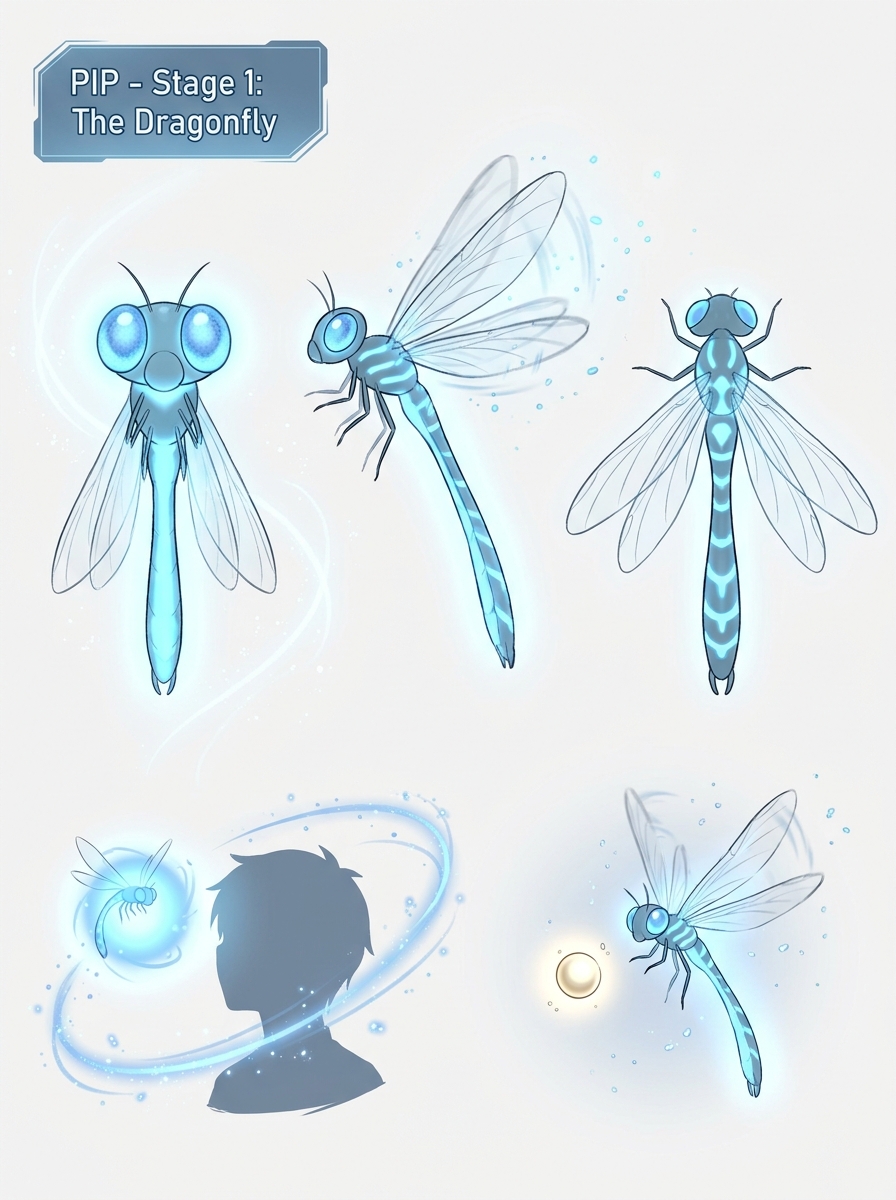
In which our protagonist discovers that the world is not, in fact, well designed, and has opinions about it.
The rain came on the sixth night. Not the polite drizzle of Tokyo summers, but a real, world-soaking, tree-bending downpour that turned the forest floor into a maze of fast-running streams. The caravan made camp early, sheltered under a rocky overhang, and watched the water rise.
Then the waterfall moved.
It did not, technically, move. The river above them had been dammed, naturally, by a fallen tree. The dam had given way under the rain, and the resulting flood was now a wall of brown water coming down the valley toward them.
"Move!" Orven shouted, and the caravan scrambled.
Kenji did not move. He was standing at the edge of the camp, looking at the water, and the Compiler was lighting up like a slot machine.
[Threat assessment: incoming water mass]
[Volume: 4000 cubic meters]
[Velocity: high]
[Time to impact: 90 seconds]
[detect_mana: water signature, ambient, no caster]
There was no caster. The water was just water. But it was a lot of water, moving very fast, and the caravan was in its path.
Kenji did the math. He did not have time to evacuate. The wagons were too heavy. The oxen would panic. The guards were shouting, the merchants were screaming, and a child, one of the merchant's children, was standing frozen in the path of the water, mouth open, eyes wide.
Kenji ran.
He did not think about it. He ran toward the child, grabbed them, threw them sideways toward one of the guards, and turned back to the water. It was maybe thirty meters away. Twenty-five. Twenty.
He had no weapons. He had no useful spells. He had one function: light, which was useless against water. He had the Compiler, which could read mana signatures, and he had Pip, who was screaming in his mind about a really big wet thing coming very fast.
And he had, suddenly, an idea.
The Compiler was not a gun. It was a debugger. It let him understand systems, not control them. But understanding a system meant understanding its rules, and the rules of water were not magic. They were physics.
He did not have time to think it through. He just spoke.
"Function redirect(channel, vector=left, force=high)!"
It was not a real function. He made it up. He treated the water like a variable, a stream of data that he could redirect with a logical command, and he threw his will, his intent, his very specific programmer's understanding of how to change the direction of a flow, at the wave.
The Compiler pulsed.
[Function generated. Cost: high. Casting: redirect. Target: incoming water. Vector: left.]
The water hit. Kenji felt it. He felt every drop, every kilogram of pressure, every joule of kinetic energy that had been in the wave. It should have crushed him. It did not, because in the space of a heartbeat, the wave split.
Not cleanly. Not dramatically. But enough. The bulk of the water, the heaviest, fastest part of the flood, was shoved sideways, deflected by a force that was not magic but was, somehow, magic anyway. It hit a boulder and split further, losing speed, and by the time it reached the camp, it was a fast stream instead of a wall.
The caravan was soaked. The wagons were half-submerged. One of the oxen looked deeply offended. But no one was dead.
Kenji collapsed on his back, gasping, mana completely drained, Pip orbiting his head in frantic spirals.
[Mana: 0%. Stamina: 12%. Status: alive.]
"Note to self," he croaked to no one in particular. "World physics: not actually physics. Add an exception class for 'logic can be a force if you believe in it hard enough.'"
Pip pulsed. The pulse felt like laughter.
The guards hauled him to his feet. The merchants stared. Orven, his face unreadable, walked up to him, looked him up and down, and said: "You just did something impossible."
"I deflected a wave," Kenji said weakly. "Probably. Kind of."
"No," Orven said. "You didn't deflect it. You changed its mind. The water didn't want to hit us. You convinced it."
"I don't think that's how it works."
"That," Orven said, "is exactly how it works. You, my friend, are very strange, and you are now officially a member of this caravan until I figure out what to do with you."
Kenji, who had nowhere else to be and no one else to be with, agreed.
Orven, though, was not done. He waited until the camp was mostly dry, until the wagons were checked, until the merchants had stopped crying, and then he pulled Kenji aside, away from the fire, into the dark.
"Listen to me," Orven said, in a voice that was not unkind but was not soft either. "What you did tonight was not just impressive. It was the kind of thing that gets noticed. By the wrong people."
"What do you mean?"
"I mean that there are those who hunt for mages who can do what you did. The churches. The kings. The academies. The cults. There are people in this world who collect unusual talents, and not all of them are friendly. You need to be careful."
"I will be."
"No, you won't. You will keep doing what you do, because you cannot help it. I see the way you think. You see a problem, you solve it, and you do not stop to think about who might be watching. That will get you killed."
He paused.
"I will keep you alive as long as I can. But the moment I cannot, you run. You understand?"
Kenji nodded. Orven nodded back, and walked away.
Pip pulsed, very softly, and the pulse felt like: "He means it."
Kenji sat by the dying fire, in borrowed clothes, with a debt he could not pay, an old man who was trying to protect him, and a small glowing dragonfly on his shoulder.
He thought: "Okay. New rule. Be useful, but be careful. The world is not just full of problems. It is full of people who will use me to solve their problems."
It was, he realized, exactly the same lesson his old job had taught him.
# WORLD.md (updated)

## Combat
- Magic can be defensive, not just offensive
- If-else logic is castable
- The enemy of a clear condition is sloppy code

## Spells
- flare: bright light, mild heat, low cost, very stable
- snare: trap, low cost, unstable, do not reuse
- spark: small flame, low cost, perfect for warming hands

## Reputation
- Orven now thinks I'm worth ten swords
- I am not worth ten swords
- I am worth maybe one and a half swords
- Do not tell him this

## Warnings
- Orven says there are people who hunt for unusual talents
- The "wrong people" include churches, kings, academies, cults
- Be careful. Be useful. Be careful.

## Pip says
- Orven means it