The Five Pillars
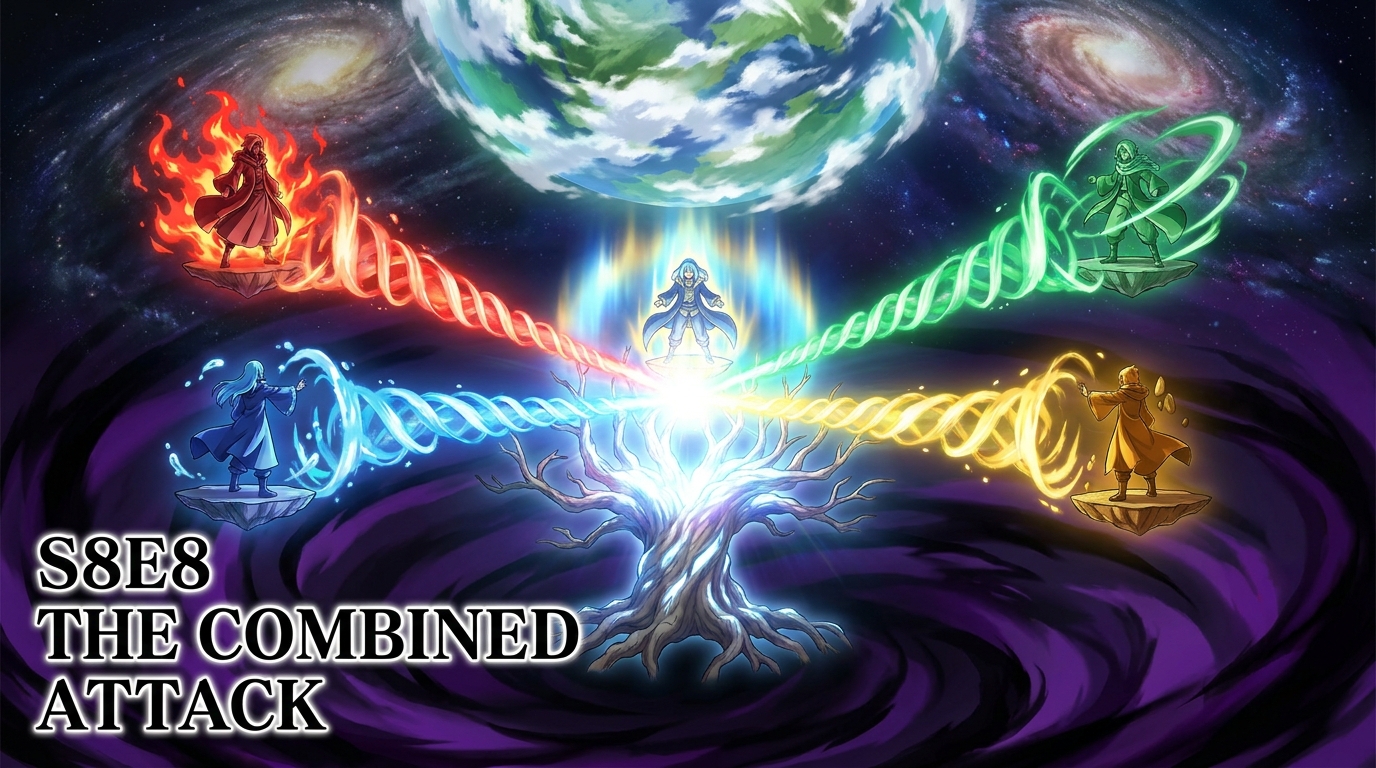
In which the developer writes down what the team already knows, and the writing-down turns out to be the load-bearing wall.
The five pillars were defined on a Sunday, because Sundays were Kenji's, and this Sunday was, in the dry language of the system in his head, the most expensive Sunday the system had ever logged.
The team was in the command tent. The rewrite was pulsing outside, faintly, the way a half-written world pulses when the half-writing is the second half and the second half is, in a small way, the only half that has ever mattered. The doubt was held. The through-line was heavy. The haunting had been three nights ago. The team had not slept properly since.
Kenji opened his notebook.
He had carried the notebook for three years. It was bent, and the leather was soft with use, and the pages were full of pseudocode, and the through-line restated in the careful hand of a developer who had decided, in a small way, that the through-line was the only thing the developer had ever had to write. He opened it to a clean page. He wrote, at the top of the page, in the careful hand:
five_pillar_system
  inputs: memory, logic, abundance, unity, love
  outputs: new_world
  cost: everything
  stability: tested
  Compiler note: the developer is writing this on a Sunday. The system is, in a small way, ahead of the developer, and the developer is, in a small way, learning, and the learning is the only thing the system has ever had to log on a Sunday.]
The Compiler was being particular. The Compiler had decided, in the dry language of the system, that the writing-down was a kind of spell, and the spell had to be precise, and the precision was the kind of thing that a senior engineer demands when the senior engineer has been asked to onboard a junior and has decided that the onboarding is, in a small way, the most expensive onboarding of the senior engineer's career.
He wrote the first definition.
"Elara holds the Memory pillar," he said, and the team looked up, and the room went quiet in the way a room goes quiet when a room has decided that the quiet is the only thing the room has ever had to be. "The memory of everyone the world has lost. The memory of Maren, the healer who stayed behind. The memory of King Haldor, the old king who held the line. The memory of the seven-year-old girl who counted the stars. The memory of Pip, who gave the original source code to the rewrite. The memory of every guard, every refugee, every name Elara has written in her notebook over seven years of defending walls."
[Memory pillar: accepted. Source: Elara Vance. Status: integrated, with weight.]
[Compiler note: the weight is, in a small way, the only kind of weight the system has ever had to log. The weight is the love.]
Elara's hand went to her notebook, the way it always went to the notebook, the way a hand goes to the place where the hand keeps the things the hand cannot say out loud. She did not speak. She did not need to. The pillar was hers. The pillar had been hers since the day her mother had taught her the names of the constellations, the day her mother had said, in the soft voice a mother uses when the mother is teaching the daughter the pattern, the threads of a tapestry are like the lines of a spell, and the lines of a spell are like the names of the lost, and the names of the lost are the memory, and the memory is the point.
He wrote the second definition.
"Lian holds the Logic pillar. The logic of the code, the logic of the debugging, the logic of the through-line, the logic of the structured magic. The logic is the spine. The logic is the debugger. The logic is the way the new world thinks, the way it debugs itself, the way it holds the through-line when the through-line is heavy and the developer is tired and the love is the only thing the love has ever had to be."
[Logic pillar: accepted. Source: Lian. Status: integrated, with elegance.]
[Compiler note: the elegance is, in a small way, the only kind of elegance the system has ever had to log. The elegance is the architecture.]
Lian tilted her head, the way she tilted her head when she was reading source code, the way a bird tilts its head. The Logic pillar was hers. The pillar had been hers since the day she had first read the world's code in S5E8, the day she had decided, in the small way a person decides when the person has found the thing the person is going to spend their life doing, that the architecture was the only thing the architecture had ever had to be.
He wrote the third definition.
"Seraphina holds the Abundance pillar. The abundance of the trade, the abundance of the resources, the abundance of the wealth that was the Silver Road, the abundance of the things the new world needs to feed itself, to clothe itself, to give itself a chance to live. The abundance is the body. The abundance is the substance. The abundance is the way the new world provides."
[Abundance pillar: accepted. Source: Seraphina. Status: integrated, with love.]
[Compiler note: the love is, in a small way, the only kind of love the system has ever had to log in a ledger. The love is the trade.]
Seraphina's hand went to the crystal at her collar, the crystal that had been the first crystal of the Silver Road, the crystal that had started the network, the crystal that had been, in the dry language of a merchant who had decided to give up the empire, the only crystal the merchant had ever had to give. The Abundance pillar was hers. The pillar had been hers since the day she had arrived in Oakhaven with a failing caravan and a desperate hope, the day she had looked at Kenji's strange magic and had decided, in the small way a merchant decides when the merchant has seen a good investment, that the investment was worth every coin the merchant had ever had to spend.
He wrote the fourth definition.
"Calla holds the Unity pillar. The unity of the kingdoms, the unity of the people, the unity of the team, the unity of the love. The unity is the connection. The unity is the web. The unity is the way the new world holds together, the way it connects, the way it remembers that the home is not the place but the people. The home is the people. The home has always been the people. The home will always be the people, in the new world, in the foundation, in the love."
[Unity pillar: accepted. Source: Calla. Status: integrated, with home.]
[Compiler note: the home is, in a small way, the only kind of home the system has ever had to log. The home is the holding.]
Calla closed her eyes, the way she closed her eyes when she was praying for the kingdoms, the way a princess who had lost a kingdom closed her eyes when the princess was deciding, in the small way a princess decides, that the home was the people and the people were the home. The Unity pillar was hers. The pillar had been hers since the day her father had stayed behind to hold the line, the day Calla had decided, in the quiet way a daughter decides when the father is gone and the kingdom has fallen, that the holding was the only thing the daughter had ever had to do.
He wrote the fifth definition.
"I hold the Love pillar, with Pip. The love that does not save. The love that is still worth giving. The love that Malachar had, and lost, and corrupted, and that I kept, and that the team held, and that the new world will know. The love is the heart. The love is the answer. The love is the only thing that has ever held the world together."
[Love pillar: accepted. Source: Kenji + kernel. Status: integrated, with everything.]
[Compiler note: the everything is, in a small way, the only kind of everything the system has ever had to log. The everything is the home, in fact, here.]
He closed the notebook. He looked at the team.
"Five pillars. Five people. Five pieces of the new world. Five pieces of the debugging. Five pieces of the love. The rewrite is not a spell. The rewrite is not a function. The rewrite is us. The rewrite has always been us. The debugging has always been us. The love has always been us. The testing is coming. The pillars will be tested. The structure will hold or the structure will break."
The team nodded. The definitions were clear. The structure was in place. The Sunday was, in the dry language of the system in his head, the most expensive Sunday the system had ever logged, and the logging was, in a small way, the only kind of logging the system had ever had to do on a Sunday.
The next step was the testing. The pillars would be tested. The new world would be tested. The team would be tested, the way a team is tested when the team is the only debugging partnership the world has ever had, and the testing is the only thing the team has ever had to do.
Pip's faint spark pulsed, in the back of his mind, very softly, and the pulse felt like: The structure is in place. The testing is coming. The pillars will hold. The team will hold. The love will hold. The debugging will hold. The hold is the only thing the kernel has ever had to log, and the logging is, in a small way, ahead of the developer, and the developer is, in a small way, ahead of the team, and the team is, in a small way, ahead of the world.
The Sunday was over. The notebook was closed. The five definitions were written, in a developer's careful hand, on a clean page, in a bent leather notebook, in a command tent, in a half-written world, in the second half of a rewrite, in the most expensive Sunday the system had ever had to log.
The testing would begin at dawn.