Elara's Stand
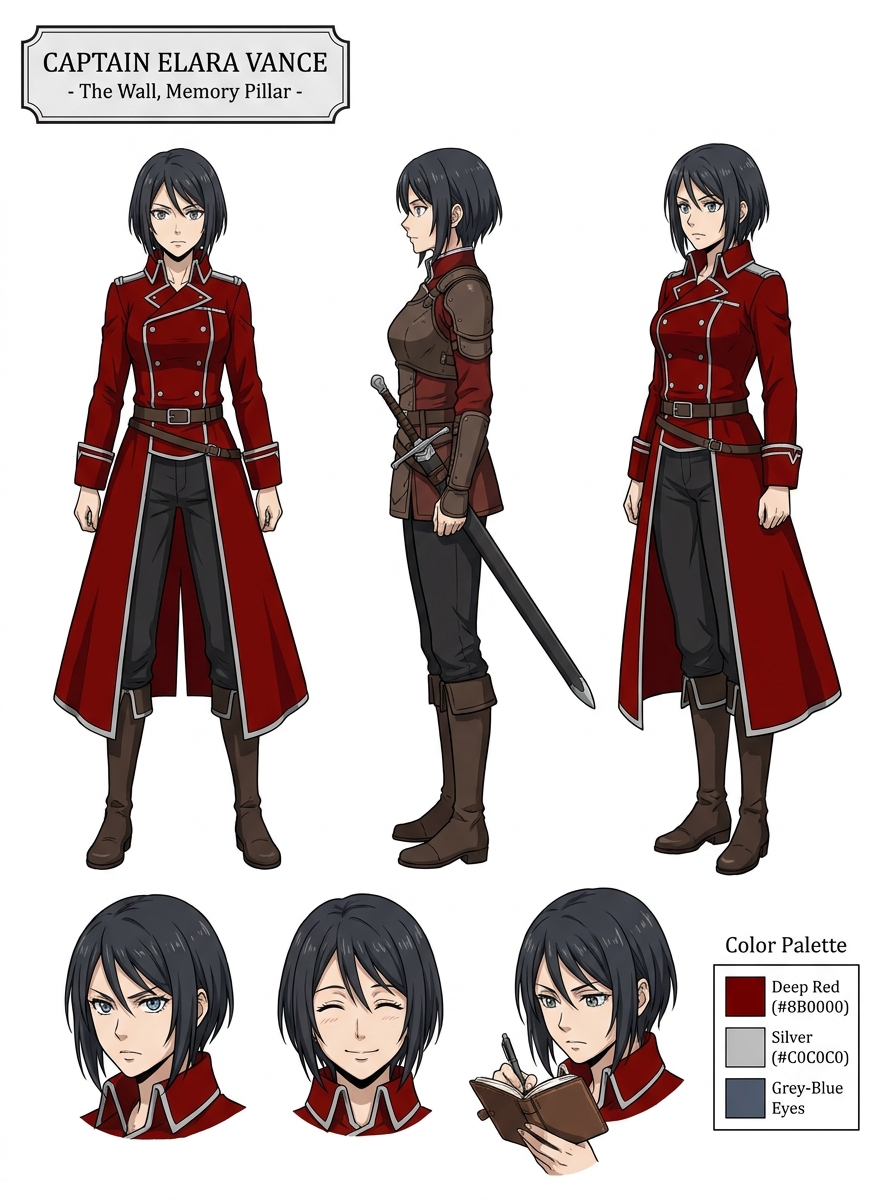
In which the Memory pillar takes the weight of every name the world has ever lost, and does not break, and the not-breaking is the foundation of the new world.
The Memory pillar was tested first because Elara asked to be tested first, and Elara did not ask for things, and the not-asking was, in the dry language of the system in his head, the senior engineer who has been asked to onboard a junior and has decided that the onboarding is the only thing the senior engineer has ever had to do.
She stood at the center of the World Root. The team stood at the four directions. The new world waited around them, half-written, pulsing faintly, the way a half-written world pulses when the half-writing is the second half and the second half is the only half that has ever mattered. The doubt was held. The through-line was heavy. The haunting was three nights behind them. The kernel of Pip was quiet, the way a watcher is quiet when the watcher is waiting for the Memory pillar to begin.
Kenji nodded to her. The nod was the kind of nod a developer gives when the developer has decided, in a small way, that the trust is the only thing the developer has ever had to give.
She began.
The first memory was her mother's.
The name came up through the foundation like a wave, the way a wave comes up through a ship's hull when the ship is, in a small way, ahead of the storm, and the storm is, in a small way, ahead of the ship. The memory was not a picture. The memory was a feeling, the kind of feeling a daughter has when the daughter is twelve and the mother is teaching the daughter the names of the constellations, and the daughter is deciding, in the small way a daughter decides, that the names are the only thing the daughter has ever had to know.
[Memory input: 1 of 6,200. Source: Elara Vance. Type: foundational.]
[Compiler note: the foundational is, in a small way, the only kind of input the system has ever had to log. The foundational is the love.]
The system logged it. The system was, in a small way, ahead of her. The system had decided, in the driest possible language, that the Memory pillar was, in a small way, the senior engineer who has been asked to onboard a junior, and the senior engineer was very, very quiet, the way a senior engineer is quiet when the senior engineer is watching the junior take the first name.
She did not stop. She took the second memory, and the third, and the hundredth, and the thousandth. The names came up through her the way names come up through a captain who has defended walls for seven years and has decided, in the small way a captain decides, that the names are the only thing the captain has ever had to defend.
Maren. The healer who stayed behind. The first casualty. The name Elara had written in the notebook the night Maren had not come back, the way a captain writes a name in a notebook when the captain has decided, in a small way, that the writing-down is the only thing the captain has ever had to do about a name.
King Haldor. The old northern king. Calla's father. The king who had held the line and had not left, the way a king holds a line when the king has decided, in the small way a king decides, that the holding is the only thing the king has ever had to be.
The seven-year-old girl. Malachar's daughter. The girl who had counted the stars. The girl who had said, in the small voice a child uses when the child is teaching the father the way the world is built, papa, the stars are like the code, all connected, all holding each other up. The girl who had died of a sickness no code could cure, the way a child dies when the child is, in a small way, ahead of every debugger, and the debugger is, in a small way, behind every child.
[Memory input: 2,847 of 6,200. Through-line weight: increasing.]
[Compiler note: the weight is, in a small way, the most expensive weight the system has ever had to log. The weight is the memory. The memory is the love.]
The weight was breaking her. Kenji could see it from the south, in the way a developer sees a function about to fail, the way a developer sees the through-line getting heavier in a way that the through-line was never supposed to be. Elara was shaking. The tears on her face were not tears. The tears were mana, the structured magic of the memory, the kind of mana that holds a world together when the world is, in a small way, the only thing the memory has ever had to be.
She did not stop.
She took the names of every guard she had ever lost. Six names, over seven years, written in a notebook, in a captain's careful hand, on nights when the captain had walked the walls and had decided, in the small way a captain decides when the captain has lost a name, that the walking was the only thing the captain had ever had to do about the loss.
She took the names of every refugee who had been lost in the floods, in the storms, in the droughts, in the years when the world had been broken and the breaking had been, in a small way, the only thing the world had ever had to be.
She took the names of the four children who had died in the assault on the southern wall, in S4E2, the children who had been too small to fight and too brave to run, the children who had been, in the small way children are, the only thing the world had ever had to lose.
She took the name of Pip.
The kernel of Pip pulsed, in the back of her mind and the back of his mind and the back of the team's mind, very softly, the pulse feeling like: I am here. I am the memory. I am the kernel. I am the love that did not corrupt. I am the watcher, the guardian, the small bright spark that the new world will run on. Take the name. Hold the name. The name is the only thing the kernel has ever had to give.
She took the name.
[Memory input: 6,200 of 6,200. Status: complete. Pillar: tested.]
[Compiler note: the pillar is, in a small way, the only kind of pillar the system has ever had to test. The pillar is the foundation. The foundation is the love. The developer is, in a small way, learning. The system approves.]
The system approved. The system was, in a small way, a colleague. Elara had not had a colleague in seven years, and the first one she had was a debug overlay inside the foundation of a half-written world, and the colleague had just told her, in the driest possible language, that the pillar had held.
She stood in the World Root, with the memory of 6,200 names flowing through her, with the tears of mana on her face, with the notebook in her belt, with the sword at her side, with the badge of the Memory pillar on her shoulder, and she cast.
The memory flowed into the World Root. The new world received it. The new world pulsed, and the pulsing was the kind of pulse a system gives when the system has just received the foundation, the kind of pulse a debugger feels when the debugger has just installed the first dependency, the kind of pulse a captain feels when the captain has just told the wall what the wall is for.
The Memory pillar was tested. The memory was held. The new world was beginning to remember.
Kenji felt the foundation shift, in the way a developer feels a system stabilize, in the way a teacher feels a student understand, in the way a developer feels the through-line become, in a small way, ahead of the doubt. The through-line was still heavy. The doubt was still held. But the foundation was in place. The 6,200 names were in place. The memory was the point. The memory had always been the point.
Elara walked back to her pillar. She did not break. The not-breaking was, in the dry language of the system in his head, the only kind of not-breaking the system had ever had to log, and the logging was, in a small way, ahead of the team, and the team was, in a small way, ahead of the world.
She passed Kenji at the south. She did not stop. She said, in the soft voice a captain uses when the captain has just taken the weight of every name the world has ever lost, and the captain is, in a small way, ahead of the weight:
"Next."
The Logic pillar would be tested at dawn. The architecture of the new world would be the spine. The spine would be elegant. The spine would be the kind of spine that a colleague writes when the colleague has decided, in a small way, that the elegance is the only thing the architecture has ever had to be.
The Memory pillar held. The foundation was in place. The new world was beginning to remember, and the remembering was, in a small way, the only thing the love had ever had to be.