The First Artifact
In which our protagonist picks up a memory, and discovers that the memory picks back.
The temple of the first code was a beautiful ruin, and the ruin had been waiting, in the driest possible language, for a thousand years for the developer who was about to walk into it.
Kenji and Elara rode through the gates of the temple on the morning of the third day, with a small guard, with the crystal network humming, with the world waiting to be rewritten. The temple was white stone and blue light. The walls were covered with the structured magic of the Compiler, the kind of code Kenji had been writing for three seasons, the kind of code that Malachar had written first, a thousand years ago, in the time when the world's first love had been the only thing the world had ever had to log.
[detect_mana: 1 source. Threat level: none. Mana signature: ancient, structured, the color of a father's first thought of his daughter.]
[Compiler note: the signature is not just an artifact. The signature is a memory. The memory is, in a small way, alive.]
The memory was alive. The Compiler had logged the signature as a memory. The system was, in a small way, ahead of him. The system was, in the driest possible language, telling him that the crystal was not a thing he was about to pick up. The crystal was a person.
He walked into the temple. Elara walked beside him, in her captain's silence, with her hand on her sword, with the Memory pillar already in her shoulders before the world had told her she was the Memory pillar. The temple was cool, and quiet, and smelled of old stone and old code. The structured magic on the walls was not corrupted. The structured magic on the walls was clean, the way the source code of a person who has not yet been broken is clean. The first code had been written in love. The first code had not yet been broken. The first code was, in a small way, the only piece of the world that was still the way the original programmer had wanted it to be.
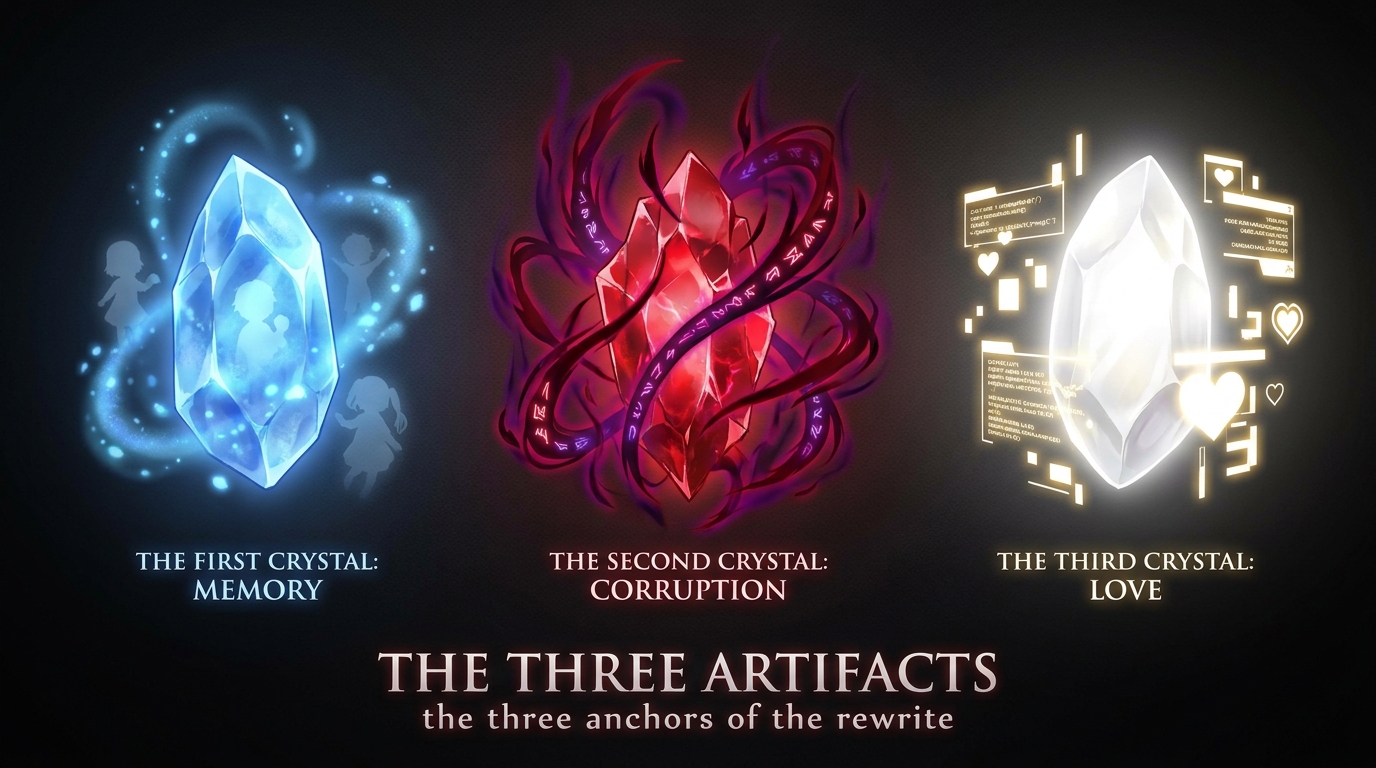
The crystal was in the center of the temple, on a pedestal of white stone, the size of a fist, glowing with a soft blue light, humming with the kind of mana that Pip had had when Pip had been a dragonfly, when Pip had been a familiar, when Pip had been a friend.
He reached for it. He hesitated. He had not hesitated like this since the moss. The moss had been a choice between hungry and dead. The crystal was a choice between holding and leaving. The holding was a weight. The leaving was a kind of forgetting, the kind of forgetting a person does when the person has decided, in a small way, that the forgetting is the only thing the person has ever had to do.
He picked it up.
The crystal was warm. The crystal was humming. The crystal was the code that Malachar had written first, the code that had been his first attempt, the code that had been his first love. The crystal was also, in the same breath, the same pulse, the same warmth, a memory. A memory of a seven-year-old girl, sitting in a garden, counting the stars, saying "papa, the stars are like the code, all connected, all holding each other up."
[Compiler note: the crystal is a memory of Malachar's daughter. The memory is preserved in the code, perfectly, forever, in the way that memories are preserved when they are too important to lose.]
[Compiler note: the developer is, in a small way, holding a person. The system is, in a small way, paying attention.]
He held a person. He held the seven-year-old girl. He held the stars. He held the love that had built the world and the grief that had broken it.
He wanted to put the crystal down. He wanted to leave it in the temple, in the cool quiet, in the place where the memory had rested for a thousand years. He wanted to let the memory be the memory, the way memories should be, the way that Malachar's memory of his daughter should have been.
But the rewrite needed the crystal. The rewrite needed the love. The rewrite needed the memory of what the world was supposed to be, before the corruption, before the grief, before the bugs. The rewrite needed, in the driest possible language, the first thing the original programmer had ever written, which had been the first love, which had been the only thing the system had ever logged before the world had decided to log the loss.
He put the crystal in the artifact case Lian had designed for him, with the mana preservation and the corruption protection and the small handwritten note on the inside of the lid that said, in Lian's careful hand: "For the rewrite. Carry gently."
Elara watched him close the case. She did not speak. The captain's voice that was, in a small way, ahead of his, was also the captain's silence that was, in a small way, ahead of his, and the silence was the kind of silence a person keeps when the person has decided, in a small way, that the silence is the only thing the person has ever had to give.
"The memory is heavy," Kenji said, after a while.
"Yes," Elara said.
"It is the memory of a person."
"Yes."
"It is the memory of a person who died, and the dying is in the memory, and the dying is also in me, now, because I am holding the memory, and the holding is the kind of holding that the rewrite needs."
"Yes," Elara said. "I know. I have been holding memories my whole life. The six guards. The refugees. The people we have lost. I have been holding the memory, in my notebook, in my bones, in the place where a captain keeps the names of the people she could not save. I have been the Memory pillar, Kenji, since the first day. The world did not have to tell me."
[Compiler note: the captain has been the Memory pillar since the first day. The system is, in a small way, the senior engineer who has been asked to confirm this, and the confirming is, in a small way, the most important confirming the system has ever done.]
[Compiler note: the developer is, in a small way, learning that the pillars are not assigned. The pillars are recognized. The recognition is the pillar.]
The pillars were not assigned. The pillars were recognized. The system had, in the driest possible language, named what Elara had been doing since the day he had met her on a wall at midnight, when she had said "I am afraid," and he had said "you are not alone," and the not-alone had been, in a small way, the through-line, restated at the level of the room.
He took her hand. They stood in the temple, with the first artifact in the case, with the memory of the seven-year-old girl in the code, with the world's first love in their keeping.
"I am going to tell you something," Elara said, after a while. "About my mother. About why I am the Memory pillar, in the way I am, in the way the system has just named. I am going to tell you tonight, by starlight, in a small village, on the way south, when we have stopped for the night. The story is long. The story is mine. The story is the kind of story a person tells once, on a cold night, when the cold has decided, in a small way, that the cold is the only thing the person has ever had to feel."
"Yes," Kenji said. "Tonight. By starlight."
Pip pulsed, faintly, in the back of his mind, the pulse feeling like: "She is about to tell you about her mother. Her mother is the original memory. The original memory is the pattern. The pattern is, in a small way, the second artifact we have not yet acquired, and the not-yet is the only thing the system has ever logged that has not been written down. The not-written-down is, in a small way, the most expensive thing the developer has not yet paid for."
Kenji sent back: "Yeah. The not-written-down is the cost. The cost is, in a small way, the love. The love is worth paying for. The love is the only thing that has ever held the world together."
The first artifact was secure. The first artifact was the memory of the seven-year-old girl, and the seven-year-old girl was the love, and the love was, in a small way, the through-line, restated at the level of the world.
They rode out of the temple. The blue light of the crystal pulsed through the leather of the case. The memory rode with them, the way a memory rides with a person who has decided, in a small way, that the riding is the only thing the person has ever had to do.
The second crystal was already being gathered, somewhere in the northern wastes, by Seraphina, by the merchant who was about to give up her empire, by the investor who was about to discover, in a small way, that the love is worth more than the wealth.