The Confrontation
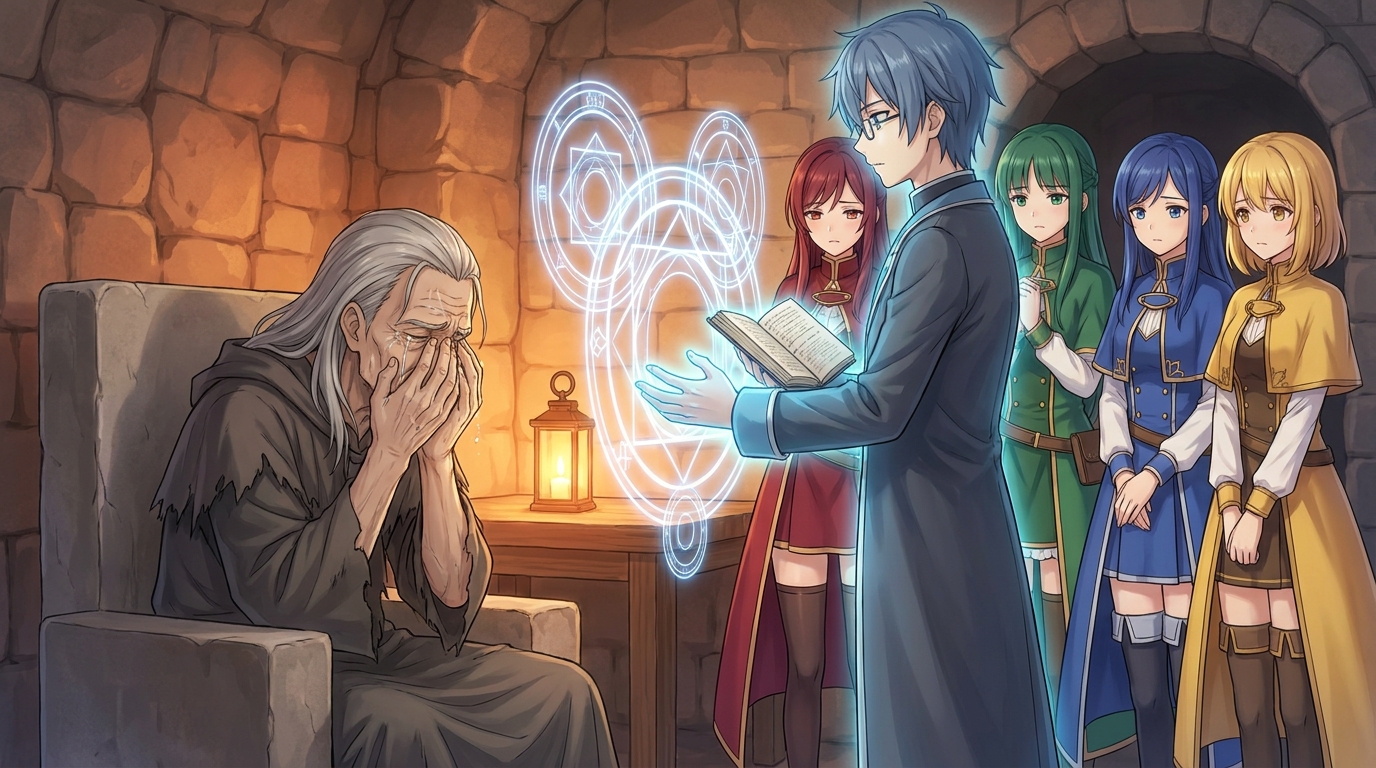
In which our protagonist meets the chaos god for the first time, and discovers that the chaos god is a tired father who has been waiting to be asked to rest.
The avatar appeared on the ninth day after the artifacts were gathered, and the appearing was, in the driest possible language, the most expensive appearing the system had ever logged.
It was not a body. It was not a person. It was a presence, vast and old and very, very tired, the kind of tired a person is when the person has been running for a thousand years and has decided, in a small way, that the running is the only thing the person has ever had to do. It was Malachar. Not the sleeping god. Not the corrupted code. The consciousness that was behind the corruption. The father who had lost his daughter. The programmer who had gone mad. The one who had built the world, and lost the world, and corrupted the world, and was now standing in the place where the world was about to be rewritten, watching the rewriting come.
The team was at the World Root, preparing the rewrite. The five pillars were in position: Elara in the east, Lian in the north, Seraphina in the west, Calla in the south, Kenji and Pip at the center. The artifacts were placed. The rewrite was ready. The new source code was in Kenji's notebook, with the letters in the comments, with the love and the grief written into the foundation, with the through-line pulsing through every line.
[Compiler v2.5.0: detecting original programmer status.]
[Status: awake, present, talking, level: grief, level: tired.]
[Compiler note: the original programmer has, in a small way, come to see the rewrite. The system is, in a small way, the senior engineer who has been asked to confirm that the developer is not the same as the original programmer. The confirming is, in a small way, the most expensive confirming the system has ever done.]
The original programmer was here. The original programmer was not the developer. The developer had a team. The developer had Pip. The developer had the love that did not save but was still worth giving. The original programmer had had none of those things. The original programmer had had a daughter who had died, and the dying had been the bug, and the bug had been, in a small way, the most expensive bug the system had ever logged.
"You have come to rewrite my world," the avatar said. The voice was not sound. The voice was pressure. The voice was weight. The voice was the voice of a father who had been carrying a grief for a thousand years, the kind of grief a person carries when the person has decided, in a small way, that the carrying is the only thing the person has ever had to do.
"We have come to debug it," Kenji said.
"You have come to delete my grief. You have come to overwrite my love. You have come to take the only thing I have left, the only thing that keeps me connected to my daughter, the only thing that keeps her memory alive."
"We have come to make a world that can hold your grief. We have come to make a world that can hold your love. We have come to make a world that can hold the memory of your daughter, the seven-year-old girl who counted the stars, the girl who said 'papa, the stars are like the code, all connected, all holding each other up.'"
The avatar was silent for a long time. The silence was the kind of silence a person keeps when the person has been carrying something for a long time and has just been told that someone else understands the weight, and the understanding is, in a small way, the only thing the person has ever had to give.
"You have been reading my letters," the avatar said, finally.
"We have been reading the corrupted code. We have been reading the grief. We have been reading the love. We have been reading the apology you wrote into the foundation of the world, the apology to your daughter, the apology to your wife, the apology to everyone you have hurt. We have been reading the apology for three seasons. The apology is, in a small way, the only thing the system has ever logged that the system has never had to debug, because the apology is not a bug, and the apology is not a feature, and the apology is, in a small way, the only thing the original programmer has ever had to write."
[Compiler note: the developer is correct. The apology is in the foundation. The apology is, in a small way, the most important piece of code the original programmer has ever written. The system is, in a small way, the senior engineer who has been asked to confirm this, and the confirming is, in a small way, the most expensive confirming the system has ever done.]
[Compiler note: the system is, in a small way, ahead of the developer. The system is, in a small way, ahead of the original programmer. The system is, in a small way, the colleague who has been asked to confirm that the love is the only thing the system has ever had to log.]
"They would not understand," the avatar said. "The world would not understand. The world would look at the corruption and see a monster, not a father. The world would look at the void and see an enemy, not a grief. The world would not understand."
"We understand," Kenji said. "We have a team. We have a family. We have a love that does not save but is still worth giving. We understand what it is to lose. We understand what it is to grieve. We understand what it is to be tired. We understand what it is to be a father, or a mother, or a partner, or a team, and to lose the people we love. We understand because we have lost. We understand because we have held. We understand because we have been the through-line, the same through-line, the only through-line, the through-line that says, in the driest possible language: any sufficiently well-defined problem is solvable, except the problem of grief, which is the bug that cannot be debugged, which is the only bug the original programmer has ever had to write, which is the only bug the new world has ever had to hold."
The avatar was silent. The silence was the kind of silence a person keeps when the person has been carrying something for a long time and has just been told that someone else understands the weight, and the understanding is the first time the person has ever been asked to put the weight down.
"What do you want?" the avatar asked, finally.
"We want you to let us rewrite the world," Kenji said. "We want you to let us make a world that can hold your grief, a world that can hold your love, a world that can hold the memory of your daughter. We want you to let us do this, not because we are stronger than you, but because we are not alone. We have a team. We have a family. We have the love that does not save but is still worth giving. We are going to do the rewrite. We are going to do it with you, or without you, but we are going to do it."
"And if I refuse?"
"Then we will debug you anyway. We will debug you the way we debug everything. We will identify the bug. We will define the fix. We will deploy. We will iterate. We will debug you until you are ready to rest."
"You cannot debug me. I am the original programmer. I am the source code. I am the bug. I am the world."
"You are the source code. You are the bug. You are the world. And you are a father. And the father is tired. And the father has been running for a thousand years. And the father needs to rest. And we are going to help you rest. We are going to help you by doing the rewrite, by making a world that can hold your grief, by making a world that can hold the memory of your daughter, by making a world where the love is still worth giving, even when it does not save."
The avatar was silent. Then the avatar did something that the team had not expected.
The avatar cried.
The avatar, the chaos god, the corruption of the world's source code, the void that had been eating the world, cried. The tears were not water. The tears were not mana. The tears were grief. Pure, structured, real grief, the kind of grief a father feels when he loses his daughter, the kind of grief that cannot be debugged, the kind of grief that can only be held.
[Compiler note: the original programmer is, in a small way, the developer. The developer is, in a small way, the original programmer. The system is, in a small way, ahead of both. The crying is, in a small way, the most expensive bug the system has ever logged. The bug is also the cure. The bug is also the love. The bug is also, in a small way, the through-line, restated at the level of the world.]
[Compiler note: the system approves. The rewrite is permitted. The original programmer has, in a small way, given permission. The giving is, in a small way, the most expensive giving the system has ever logged.]
The system approved. The rewrite was permitted. The original programmer had given permission. The system was, in a small way, ahead of both of them. The system was, in the driest possible language, the colleague who had been asked to confirm that the crying was the cure, and the confirming was, in a small way, the most expensive confirming the system had ever done.
The avatar wiped the tears. The avatar looked at the team. The avatar looked at Kenji, and Pip's faint spark in the back of Kenji's mind, and the five pillars around the World Root, and the artifacts pulsing, and the new source code in the notebook.
"You would do this for me?" the avatar asked. "You would do the rewrite, make a new world, hold my grief, remember my daughter, give me rest? You would do this for the bug that has been corrupting your world for a thousand years?"
"We would do this for the father," Kenji said. "The bug we will debug. The father we will help. The grief we will hold. The daughter we will remember. The love we will give. The love is, in a small way, the only thing the system has ever logged that the system has never had to debug, because the love is not a bug, and the love is not a feature, and the love is, in a small way, the only thing the rewrite has ever had to be."
The avatar nodded. The avatar, for the first time in a thousand years, was still.
The rewrite was about to begin.
Pip pulsed, faintly, in the back of Kenji's mind, the pulse feeling like: "He gave permission. He cried. The crying is the cure. The cure is, in a small way, the love. The love is, in a small way, the through-line, restated at the level of the world, and the world is, in a small way, the home, in fact, here. The next phase is the rewriting. The next phase is, in a small way, the only thing the spark has ever had to do, and the doing is, in a small way, the through-line, restated at the level of the world, and the world is, in a small way, the home, in fact, here."
The team stood. The five pillars held. The rewrite was about to begin.