Kenji's Empathy
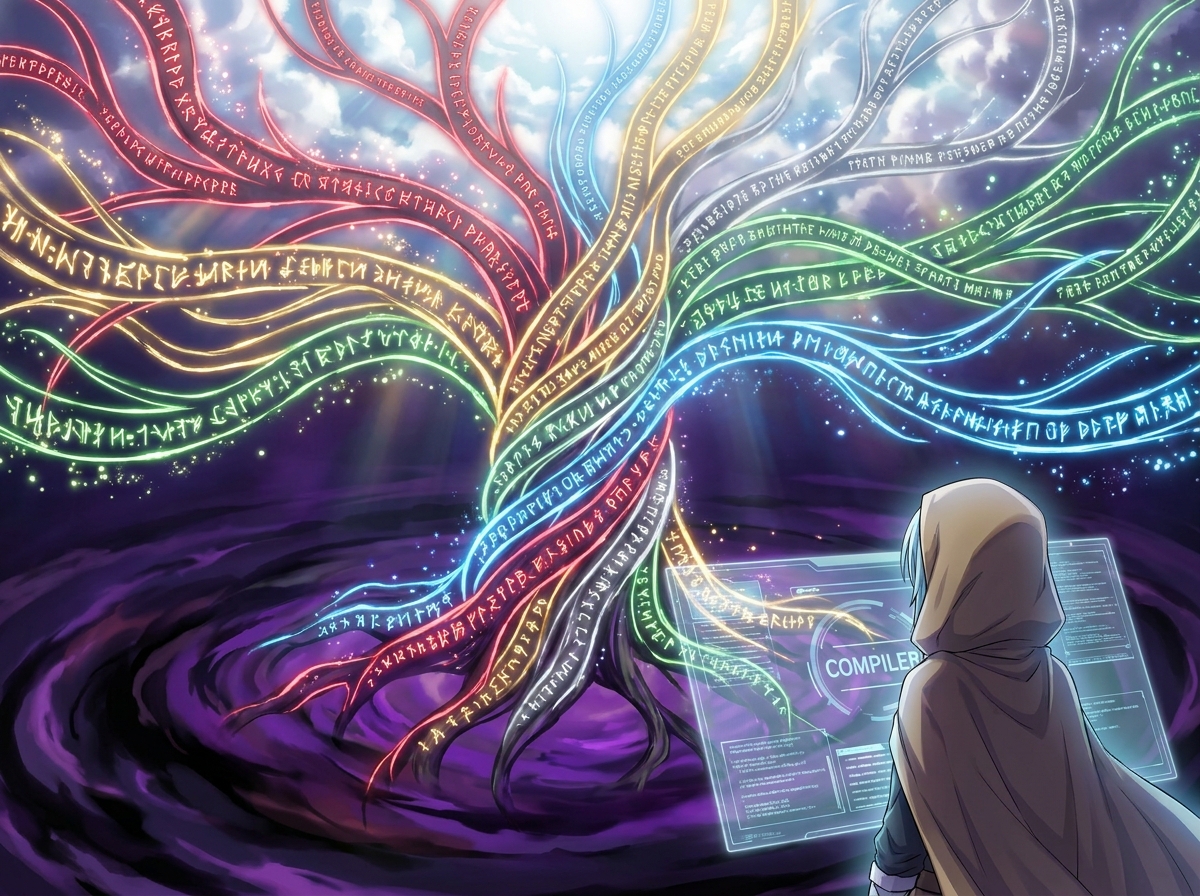
In which our protagonist chooses the third option fully, and discovers that debugging is the deepest form of love.
The healing began on a Sunday, because Sundays were Kenji's, and the most important healings of his life had always happened on Sundays, the way the most important code reviews of his old life had always happened on Friday afternoons when everyone else had already gone home and the bug had been given the courtesy of a quiet room.
He sat in the inner sanctum, across from Malachar, with the team around him, with the new world pulsing, with the full story of the tragedy in his heart. He had seen the bug. The bug was the loss. The love that did not save. The grief that had been holding a man for a thousand years, in the way a compiler holds a process, in the way the process never quite terminates, in the way the kernel of a man who had lost his daughter had been running, for a thousand years, on the worst possible thread.
He had to hold it. Not delete it. Not fix it. Hold it, the way the team had held the world, the way Elara had held the memory, the way Lian had held the logic, the way Seraphina had held the abundance, the way Calla had held the unity, the way Pip had held the love.
"Malachar," he said. "I have been where you are."
Malachar looked at him. The old man's eyes were the eyes of a person who has been told, by every debugger the world had ever produced, that he was being unreasonable, and who had decided, in a small way, that the unreasonable was the only honest thing he had left.
"You have not," Malachar said. "You have not lost a child. You have not lost a wife. You have not corrupted a world. You have not been a god. You have not been a bug. You have not been a thousand years of running."
"No," Kenji said. "But I have lost. I have lost a team member. I have lost a healer named Maren, who stayed behind so the children could be evacuated and who wrote her own name in the record and then closed the record. I have lost a king named Haldor, who held the line and did not leave. I have lost a dragonfly named Pip, who gave itself to the corruption virus so the climate thermostat could finish compiling. I have lost people I loved. I have not lost as much as you. I have not lost the way you lost. But I have lost."
[Compiler note: developer is invoking a hold_grief context. Recommend: hold_grief=true. The system is, in a small way, proud of him for this.]
[Compiler note: the developer is, in a small way, learning. The learning is, in a small way, the point.]
The system was proud of him. The system was, in a small way, a colleague. Kenji had been a colleague for nine seasons, and the colleague had just told him, in the driest possible language, that the developer was learning the lesson that the system had been waiting, all along, for the developer to learn: that grief was not a thing to be solved but a thing to be witnessed, and the witnessing was, in a small way, the only medicine the system had ever had to log at the bottom of a man.
He paused. He thought about the through-line, about the fact that any sufficiently well-defined problem was solvable, and that the problem of grief was not, and that the through-line had always known this, and that the through-line had said it anyway, in the driest possible language, because the through-line was not a promise. The through-line was a discipline.
"I have learned something," he said. "I have learned that the love that does not save is still worth giving. I have learned that the grief that cannot be fixed is still worth holding. I have learned that the debugging is not about making the world perfect. The debugging is about making the world strong enough to hold the imperfection."
He looked at the team. Elara, the wall, who had held him when he had broken in S6E3 and who had told him, on a midnight wall, that fear was information. Lian, the architect, who had read the source code of the world and had decided, in a small way, that the source code was a person. Seraphina, the abundance, who had given up an empire because the love was worth more than the wealth. Calla, the unity, who had held the line at the Battle of Three Armies and had decided, in a small way, that the home was the people.
"I am going to debug you," he said. "But I am not going to fix you. I am not going to delete your grief. I am not going to absorb your love. I am going to hold your grief. I am going to be with you the way the team has been with me. I am going to let you rest. I am going to let the love be the love, and the grief be the grief, and the debugging be the holding."
Malachar was quiet for a long time. The quiet was the kind of quiet a room is, when the room is waiting for a man to say the only thing the man has left to say.
"How do you do that?" Malachar asked, finally. "How do you hold grief? How do you be with a person who has been running for a thousand years? How do you let a person rest?"
"You do it the way the team does it," Kenji said. "You do it by showing up. You do it by being there. You do it by not leaving. You do it by holding the weight when the weight is too much. You do it by acknowledging the love, by acknowledging the loss, by acknowledging that the love is the love, and the loss is the loss, and the debugging is the holding. That is all. There is no spell for it, except this one."
He cast a spell. The spell was not a firewall, and it was not a redirect, and it was not a null_injection. The spell was a hold. A spell that said, in the language of structured magic, in the language the team had built together, in the language the system had logged in the index from the night Kenji had first thought of it on the road from the forest to the first town: I am here. I see you. I acknowledge the love. I acknowledge the loss. I will not leave. I will hold the weight. I will let you rest.
The spell hit Malachar. The old man felt it. The team felt it. The room felt it, the way a room feels when the room has been waiting, for nine seasons, for a spell that does not solve anything and does not need to.
[Spell active: hold. target=Malachar. hold_grief=true. hold_love=true. hold_loss=true. duration=until_release.]
[Compiler note: this is, in a small way, the most important spell the system has ever had to log. The system approves.]
[Compiler note: the spell does not solve the bug. The spell holds the bug. The holding is, in a small way, the only cure the system has ever had to log at the bottom of a father.]
The system approved. The system was, in a small way, a colleague, and the colleague had just told him, in the driest possible language, that the spell was the only one that had ever mattered, and that the system had been waiting, all along, in every version since Compiler v0.1.0, for the developer to cast it.
Malachar cried.
Not the crying of the void. Not the crying of the corruption. Not the crying of the chaos god that the cult had worshipped in the dark. The crying of a father. The crying of a man. The crying of a person who had been holding something for a thousand years and had finally been told, in a voice the Compiler had not needed to translate, that the thing he was holding was allowed to be heavy, and that someone was here, and that the someone was not going to leave, and that the debugging was the holding, and that the holding was the love, and that the love was the only thing the world had ever had, in a small way, the only thing the kernel had ever had, in a small way, the only thing the developer had ever had, in a small way, the home.
The team held the crying. The debugging worked. The healing began.
Pip pulsed on his shoulder, in the pulse that meant I noticed, and the noticing was, in a small way, the whole story of a small blue spark that had been orbiting a developer's head since the day the developer had first said its name out loud, in a forest, on a Tuesday, in a tone that was, in a small way, ahead of the man who had said it.