The Void Spreads
In which our protagonist rides south, the world begins to be deleted, and the debugging of the world, in fact, begins.
Kenji was on the third horse since dawn, and the horse was not his, and the saddle was not his, and the road was not his, and the only thing in the world that was his was the faint pulse in the back of his mind, the one that was, in the driest possible language, telling him to ride faster.
[Compiler v2.0.0: online.]
[Direction: south, toward the World Root.]
[Estimated arrival: 18 hours if the developer stops for tea. 14 hours if he does not.]
[Compiler note: the developer has not stopped for tea in two days. The system approves, in a small way.]
The void had crossed the southern coast by the time he left the capital. The reports were coming in over the crystal network, the reports were not slowing, the reports were accelerating, and the acceleration was, in the small specific way a person notices a slide on a dashboard they used to own, the kind of acceleration that ended careers. He had, in his old life, watched a few of those dashboards. He had, in the small specific way a person who has been paged at 3 AM notices, learned to read them. He was reading this one now, on horseback, on a road that was not his, toward a world that was being deleted.
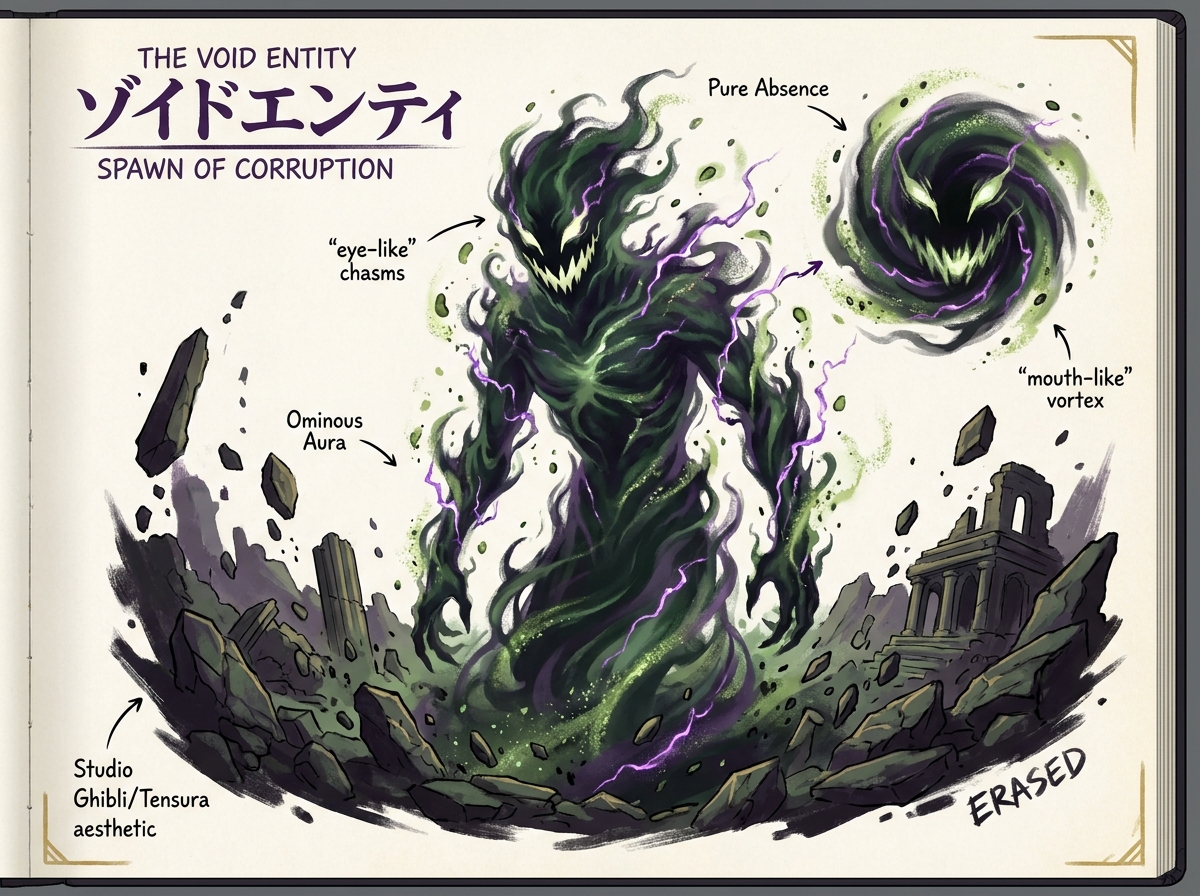
The southern kingdoms were already gone. The cities had not been destroyed. They had been deleted. The stone, the wood, the people, the children in the schoolyards, the old men in the squares, the cattle in the fields, the dogs on the porches, all of it had been replaced by a nothing, a faint shimmer in the air, the kind of shimmer a person sees when they have been staring at a screen too long and the screen has stared back. The shimmer was the absence of code. The shimmer was the bug that was not a bug. The shimmer was the end of the file, the part of the document where the writing just stops.
[detect_world_integrity: failing.]
[Composition of failure: absence. The system is, in a small way, the senior engineer who has been asked to onboard a junior apocalypse.]
[Compiler note: this is not a bug. This is the source code being deleted. The system is, in a small way, afraid.]
Lian was at the World Root. Elara was with her. Calla was with her. Seraphina was in the south, running the Silver Road, getting people out, moving supplies, doing the only thing that could be done when the world was being deleted, which was to put bodies between the void and the people who had not yet been deleted. The four of them were holding the line. The four of them were, in a small way, ahead of him.
Pip's faint spark pulsed, urgent, blue, in the back of his mind. The pulse felt like: "The system is dying. The team is waiting. The debugging is not over. The debugging is, in a small way, the only thing that has ever held the world together."
Kenji sent back, in the language he and Pip had built together over two seasons of practice: "I know. I am coming. I am coming as fast as a man on a borrowed horse can come."
He had not slept in three days. He had not eaten in two. He had been in his chair, the chair King Theodore had given him, the chair that had been the symbol of his refusal to be a king, and he had been watching the reports, and the reports had been bad, and the bad had been getting worse, and the worse had been getting worse faster, and the faster had been the kind of faster that a person used to reading dashboards recognized as the curve on the graph that meant the system was no longer responding to patches.
[Compiler query: developer has been in the chair for 71 hours.]
[Recommended action: move. Eat. Drink water. Stop watching the reports.]
[Compiler note: the chair is not the answer. The chair is, in a small way, the place developers go to die.]
He had stood up. He had walked out of his office. He had walked to the stables. He had saddled the fastest horse he could find, which was not very fast, because the fastest horses in the capital had already been taken by the army, by the council, by the people whose job it was to ride fast toward things that were breaking. He had ridden south. He had been riding south for fourteen hours. He had been riding south for fourteen hours, and the only thing he had been able to think about, in the small specific way a person who has been debugging for ten years thinks about a system that is failing, was that the through-line was not going to be enough.
The through-line. Any sufficiently well-defined problem is solvable. He had said it, in his old life, the way a person says a thing they believe. He had said it in this life, the way a person says a thing that has become true by being said. He had said it to a king. He had said it to an alliance. He had said it to a continent. The through-line had held. The through-line had built an aquifer. The through-line had built a firewall. The through-line had built a thermostat, a network, an alliance, a continent of debuggers who had learned to say the words and mean them.
The through-line was not going to hold the void. The void was not a problem. The void was the end of problems. The void was the part of the file where the writing just stopped, and the through-line was, in the small specific way a person who has read the documentation of a failing system understands, the kind of tool that worked on solvable problems and not on the absence of problems. He had, he thought, riding through the night, riding through the refugee columns, riding through the broken roads, finally found the kind of bug that the through-line could not fix. He had been dreading it for two seasons. He had, in the dry language of the system in his head, been quietly hoping the dreading was not, in a small way, going to be the most accurate thing he had ever done.
By midnight, the southern camp was visible as a smear of firelight on the horizon. By one in the morning, he was inside the perimeter, and the guards were letting him through, and the guards were looking at him the way guards looked at the person who was supposed to fix it, which was the look a person gives to the only person left who has not yet admitted they cannot fix it. He fell off the horse. He landed, badly, in the dirt. He lay there for a moment, breathing hard, feeling the faint pulse of Pip in the back of his mind, the pulse that was, in a small way, a colleague.
Lian caught him before he could try to stand. She had been waiting at the edge of the camp, with a lantern, with a blanket, with the look of a person who had been waiting for a long time and had decided to wait some more. She caught him under the arm, and she held him, and she said, in the quiet voice of a person who had been working at the World Root for weeks: "You came."
"I came," he said, and his voice was hoarse, and his voice was, in the driest possible language, the voice of a man who had been riding for fourteen hours and had not been sure, for the last four of them, that he was going to make it. "I could not stay in the chair. The chair was not the answer."
"The chair is never the answer," she said. "The chair is where the reports come in. The chair is not where the debugging happens."
[Compiler note: the chair is not the answer. The chair is the place developers go when they have stopped debugging.]
[Compiler note: the developer has, in a small way, learned this. The system is proud of him, in a small way.]
[Compiler note: the system is, in a small way, a colleague.]
He let her take his weight. He let her lead him to the small command tent, where the rest of the team was waiting, where Elara was standing with her sword at her hip and her notebook in her belt, where Calla was sitting in her armor with the look of a person who had been holding the line for weeks and was not going to stop holding it, where Pip's faint spark was brighter in the back of his mind, the way a faint spark gets brighter when it is closer to the source code. The team was waiting. The team was, in a small way, the only thing that had ever held the world together.
"We need you," Lian said, quietly. "We cannot read the World Root without you. We cannot write the new source code without you. We cannot do the thing we have to do without you. The void is not stopping. The void is accelerating. The team has been holding the line, but the team is, in a small way, ahead of the debugging, and the debugging is the part that needs you."
He sat down. He looked at the four of them. He looked at the void on the horizon, faint shimmer in the air, the part of the file where the writing just stopped. He looked at the World Root, the place where the source code was generated, the place where the rewriting would have to happen. He thought about Maren, the healer he had met at the southern council two seasons ago, the healer who had believed in the through-line, the healer who had been helping the evacuation in the south. He thought about the through-line. He thought about the fact that the through-line was true, that any sufficiently well-defined problem was solvable, but that some problems took the people who tried to solve them.
"Okay," he said. "I will help. What do we do?"
"We rewrite the World Root."
"How?"
"We do not know yet. But we will figure it out. Together. That is what we do."
[Skill: southward_debugging (passive, range: continental) acquired through use of new_function().]
[Compiler note: this is a function the developer did not ask for. The system is, in a small way, ahead of the developer.]
[Compiler note: the developer is, in a small way, learning. The system is, in a small way, a teacher.]
The void shimmered on the southern horizon, patient, vast, the kind of patient a system is when the system has decided, in fact, to delete itself. The debugging was about to begin, in earnest, in the south, in the dirt, in the cold, with a team that had been waiting for him, with a man who had finally stopped sitting in the chair and started riding. The team was, in a small way, the only thing that had ever held the world together, and the world was, in a small way, the kind of world the system was, in a small way, going to be logging as "the home, in fact, here, in fact, worth debugging, in fact, the only world the developer has ever had."
Somewhere in the deeper code, in the place where the original programmer had written the foundations, a faint presence stirred, the way a debugger stirs when the system has decided, in fact, that the system is awake, and the awakening was, in a small way, the kind of awakening the system was, in a small way, going to be remembering for the rest of the season.