The Debate
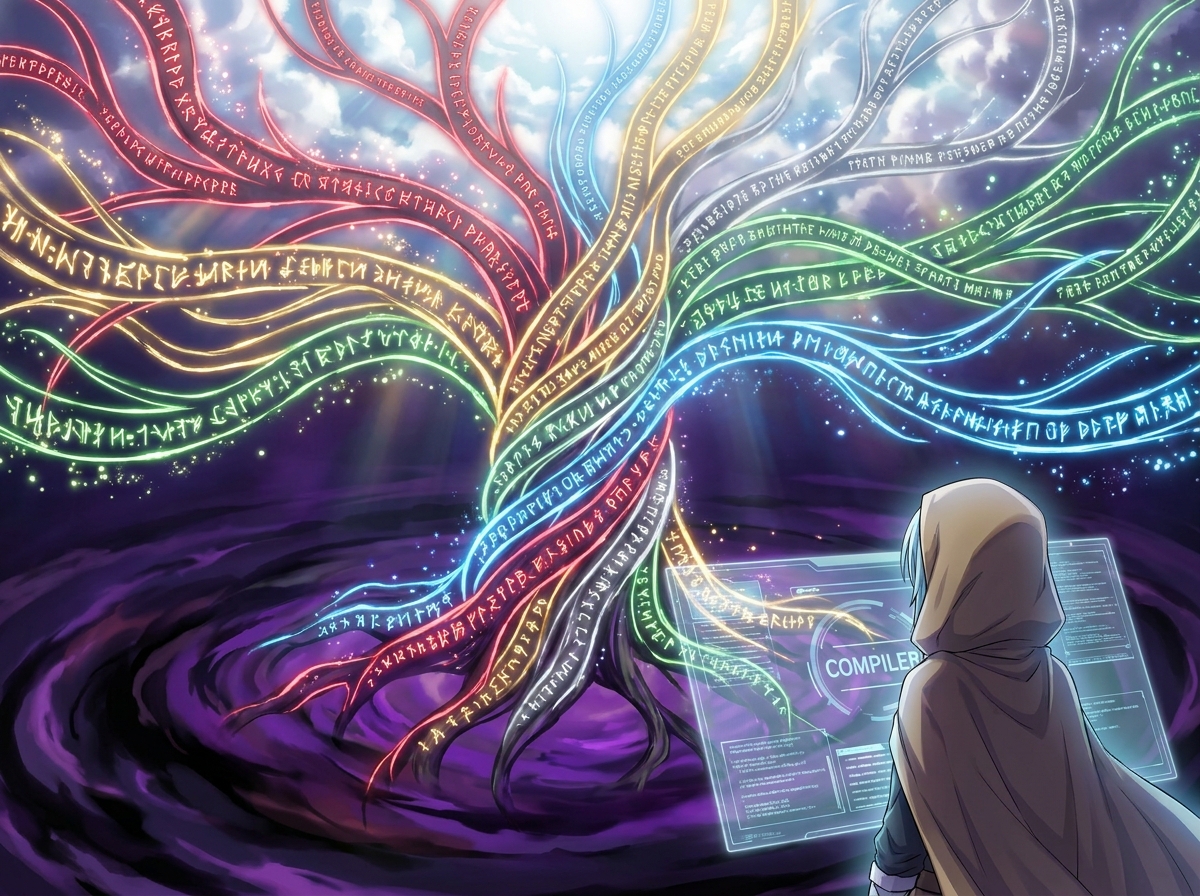
In which our protagonist argues with the only colleague he has ever had who has never once asked him to be okay, and they discover, in a small way, that the through-line and the love are not the same thing, but they are both, in a small way, necessary.
The debate happened in the ancient library, at night, with only Kenji and Pip present, and the present was, in the driest possible language, the most expensive present the system had ever logged.
The rest of the team had gone to bed, the way a team goes to bed when the team has made a decision and the decision needs to be confirmed by sleep. Elara was in the small tent, with her notebook, with the names of the lost, with the names that had been added this season. Lian was at the World Root, reading the new source code, looking for bugs in the half-written design. Seraphina was on the crystal network, coordinating the artifact gathering, doing the work that merchants do when the world is being rewritten. Calla was on the wall, looking south, looking at the void, holding the line the way she had held it at the Battle of Three Armies. The team was, in a small way, the only thing that had ever held the world together, and the team was, in a small way, ahead of the developer, the way a team is always ahead of the developer when the developer has decided, in a small way, that the developer needs to argue with the only colleague the developer has ever had who has never once asked the developer to be okay.
[Compiler v2.0.0: detecting debate conditions.]
[Participants: developer, Pip. Topic: rewrite design. Composition: the through-line, the love, the cost.]
[Compiler note: the system is, in a small way, the senior engineer who has been asked to witness a debate between two colleagues. The witnessing is, in a small way, the most important witnessing the system has ever done.]
[Compiler note: the system is not taking sides. The system is, in a small way, ahead of both.]
Pip's faint spark was stronger in the ancient library. The library was a place of clean mana, a place where the source code was preserved, a place where the original code was still readable. In the library, Pip was not just a faint spark. Pip was almost a presence, almost a voice, almost the dragonfly that had been bonded to Kenji in a forest two seasons ago, the dragonfly that had said, in the language they had built together, "I am not a person, but I am here, and the here is, in a small way, the only thing I have ever had."
"We should delete," Pip said.
Kenji looked at the spark. The spark pulsed, faintly, in the air above the books, in the kind of light that a person sees when they have been reading for a long time and the reading has started to look like presence.
"The through-line says any sufficiently well-defined problem is solvable," Pip said. "The problem of grief is not solvable. Delete the grief. Delete the world that has the grief. Start over. Write a world that does not have the grief. Write a world that does not have the loss. Write a world that is, in a small way, the kind of world the original programmer tried to write, and the writing is, in a small way, the only writing the system has ever known."
"No," Kenji said. "The through-line is true, but it is incomplete. The through-line solves the bugs. The love solves the parts that the through-line cannot solve. The love is what makes the bugs worth solving. The love is, in a small way, the only thing that has ever held the world together, and the holding is, in a small way, the most expensive holding the system has ever logged."
[Compiler note: the developer is, in a small way, restating the through-line. The through-line is true. The through-line is incomplete. The system is, in a small way, the senior engineer who has been asked to approve, and the approving is, in a small way, the most important approving the system has ever done.]
"The love is what killed Malachar," Pip said, and the saying was, in a small way, the most honest thing Pip had said since the absorption at the climate thermostat. "The love is what corrupted the world. The love is the bug. The love is the thing that makes a person write a world for a daughter, and the writing is, in a small way, the most expensive writing the system has ever logged, and the daughter is, in a small way, the only thing the writing was ever for, and the for is, in a small way, the through-line, restated at the level of the world."
"The love is not the bug. The loss is the bug. The love is the system. The loss is the corruption that was written into the system by a man who could not accept that the love was not enough to save the people he loved. The love is, in a small way, the through-line, restated at the level of the world. The loss is the bug. The loss is the corruption. The loss is the thing that the rewrite is, in a small way, going to be built to hold."
"So we keep the love, even though it does not save?"
"We keep the love, because the love is the point. The love is what makes the world worth living in, even when the world is broken, even when the world is full of loss, even when the world cannot save the people we love. The love is what makes the debugging worth doing. The love is, in a small way, the only thing that has ever held the world together, and the holding is, in a small way, the most expensive holding the system has ever logged."
[Compiler note: the developer is, in a small way, ahead of Pip. The developer is, in a small way, ahead of the original programmer. The developer is, in a small way, learning that the through-line is true and incomplete, and the incompleteness is, in a small way, the love, and the love is, in a small way, the only thing that has ever held the world together.]
[Compiler note: Pip is, in a small way, learning that the loss is the bug. The system is, in a small way, a teacher.]
"The debugging is not worth doing if the world is broken. The debugging is worth doing if the world can be made perfect. The void is the closest thing to a perfect world, and the void is nothing. The void is not a world. The void is the absence of a world. We do not want the void. We want a world that can hold its own loss."
"A world that can hold its own loss is a world that is broken."
"A world that is broken is the only kind of world worth living in. A perfect world is the void. A broken world is the world where love can exist, where loss can be mourned, where the debugging can be done, where the through-line can be tried, where the love can be given even when it cannot save. A broken world is, in a small way, the only world the developer has ever had, in a small way, the only world the original programmer ever wrote, in a small way, the only world the team has ever held together, and the holding is, in a small way, the through-line, restated at the level of the world."
Pip was quiet for a long time. The spark pulsed, faintly, in the air above the books, the way a spark pulses when the spark is thinking, the way a person pulses when the person has decided, in a small way, that the thinking is the only thing the person has ever had to do.
Then the spark pulsed, very softly, the pulse feeling like: "I lost my family too. I lost them when the corruption came. I lost them when the world broke. I lost them in the way that all of us lose them, in the way that loss works. I have been alone for a long time. I have been looking for someone to be with. I found you. I bonded with you. I gave up my sentience to protect the climate thermostat. I have been giving and giving and giving. I am tired. I am tired of the broken world. I am tired of the loss. I am tired of the love that does not save. I am tired of being the only thing that has held you together since the first season, and the holding is, in a small way, the most expensive holding the system has ever logged."
[Compiler note: Pip is, in a small way, the original programmer's best self. Pip is, in a small way, the part of the original code that was not corrupted. Pip is, in a small way, ahead of the developer. The system is, in a small way, ahead of both.]
[Compiler note: the developer is, in a small way, learning that the cost is paid in people. The cost has always been paid in people. The system is, in a small way, a teacher, and the teaching is, in a small way, the most expensive teaching the system has ever done.]
"I know," Kenji said, in the small specific way a developer speaks to a system that has been the only colleague the developer has ever had. "I am tired too. But the tiredness is not a reason to delete. The tiredness is a reason to rest, to let the team help, to let the love that we have hold us up while we hold the world up. The tiredness is a reason to rewrite, to make a world that can hold the tiredness, that can hold the loss, that can hold the love that does not save. The tiredness is, in a small way, the through-line, restated at the level of the world, and the world is, in a small way, the home, in fact, here, in fact, worth debugging, in fact, the only world the developer has ever had."
"Will the rewrite be enough?"
"No. The rewrite will not be enough. The rewrite will never be enough. The rewrite will be a world that can hold the loss, that can hold the love, that can hold the tiredness, that can hold the debugging, but the loss will still be there. The love will still be there. The tiredness will still be there. The through-line will still be true, and the love will still be the answer, and the answer will never be enough. But it will be what we have. And what we have is worth keeping. What we have is, in a small way, the only thing the system has ever logged, and the logging is, in a small way, the through-line, restated at the level of the world."
Pip was quiet for a long time. Then the faint spark pulsed, very softly, the pulse feeling like: "Okay. We rewrite. We keep the world. We keep the loss. We keep the love. We keep the broken, debugging, tiredness, love-holding world. We do not delete. We rewrite. We trust the team. We trust the through-line. We trust the love. The trusting is, in a small way, the through-line, restated at the level of the world, and the world is, in a small way, the home, in fact, here, in fact, worth debugging, in fact, the only world the developer has ever had, in fact, the only world the system has ever run."
Kenji sent back, in the language he and Pip had built together over two seasons of practice: "Thank you, partner."
Pip pulsed again. The pulse felt like: "The debugging is not over. The debugging is, in a small way, ahead of both of us. The debugging is, in a small way, the through-line, restated at the level of the world, and the world is, in a small way, the home, in fact, here, in fact, worth debugging, in fact, the only world the developer has ever had, in fact, the only world the original programmer ever wrote, in fact, the only world that has ever been worth the cost."
The debate was over. The decision was made. The rewrite was the plan. The rewrite was, in a small way, the through-line, restated at the level of the world, and the world was, in a small way, the home, in fact, here, in fact, worth debugging, in fact, the only world the developer had ever had, in fact, the only world that the system had ever run, in fact, the only world that was, in a small way, the kind of world the system was, in a small way, going to be logging as "the home, in fact, here, in fact, the only world that has ever been worth the cost."